
'My instinct was to try to fix their feelings'
Melinda Wenner Moyer and "Hello, Cruel World!: Science-Based Strategies for Raising Terrific Kids in Terrifying Times"


Melinda Wenner Moyer is an award-winning journalist whose work explores the intersection of science and everyday life. Her most recent book, “Hello Cruel World!”, is a science-based guide to confidently raising kids who will be resilient, true to their values, and primed to make their world a better place. I spoke with Melinda about her book, the scariness of our kids’ big feelings, and the fun parts of the tween and teenage years.
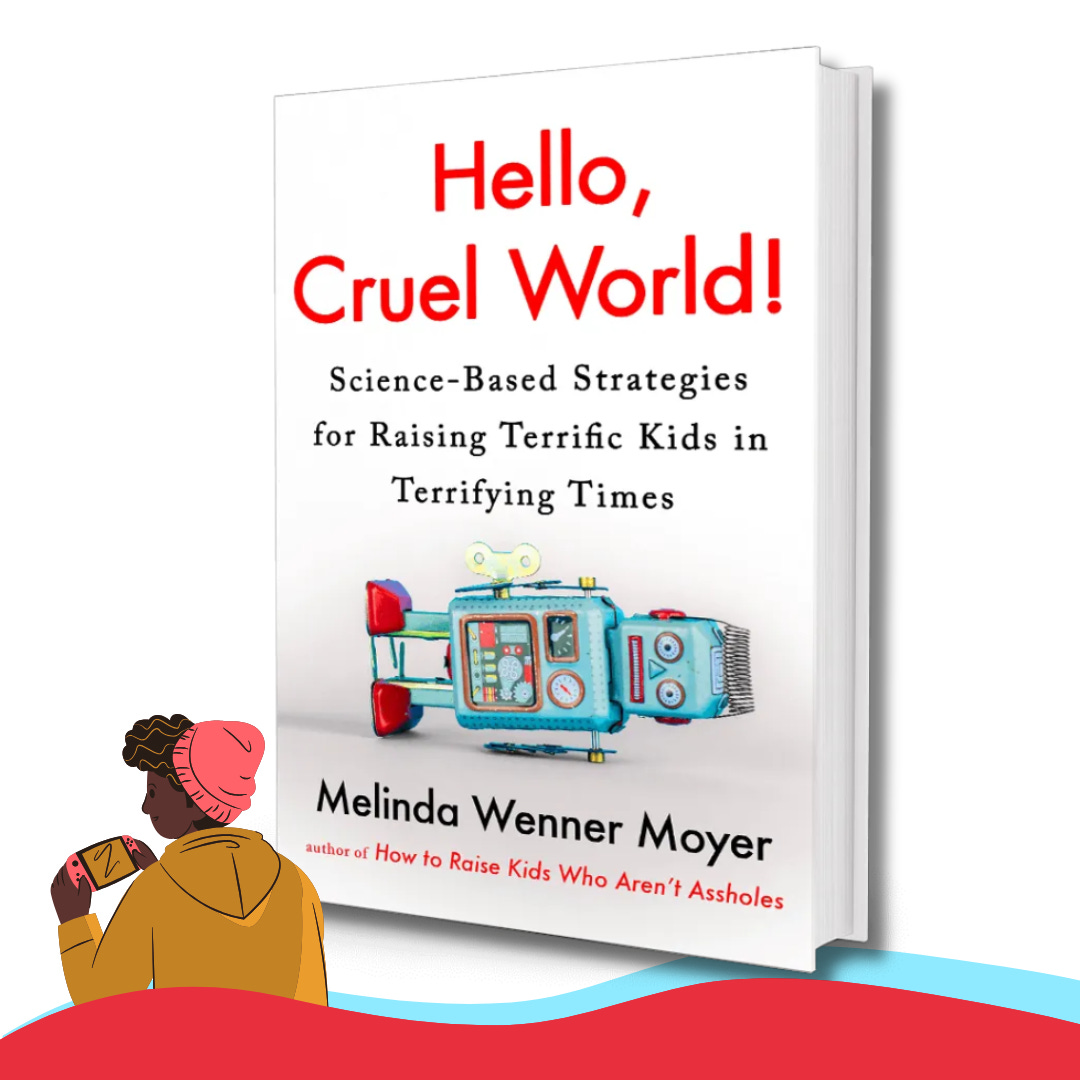
Tell me a little bit about the book and its promise. What is the book about, and what do you hope people will take away from it?
I wrote the book initially as a kind of response to my own anxiety and angst about being a parent right now. I really found myself waking up thinking about, how am I going to raise my kids to handle this world, which feels like it’s changing so rapidly? How can I raise them to deal with difficult situations, misinformation, academic pressures, social media, all these things? And also how to raise them to develop the skills to maybe make the world a little better. That was the inspiration for the book and also my Substack.
And I was hearing the same thing from other parents. They were really worried about how they were going to raise kids to survive and thrive in this changing world. So I decided I would do the research and see if there’s anything that could be useful to us as parents.
What makes it feel hard to raise kids that are media literate, resilient, and all these things?
I think there's a lot of contributing factors. One is a feeling of lack of control. During the pandemic, I talked to researchers who said everybody feels out of control and that there’s uncertainty for the future. And it’s even more so in the parenting community.
Social media is just, like, happening, and how do I understand it, how do I get some sense of control? it just feels like there’s so much going on and so much that’s changing.
There have been so many other times in history that have been harder, but most parents right now, with kids between the ages of 2 and 20, didn’t grow up during super turbulent times, so it feels like a very different world to be raising kids in, and we don’t know how to do that.
Most parents right now didn’t grow up during super turbulent times,
so it feels like a very different world to be raising kids in
Research suggests that parental anxiety is so high right now, and has been since the pandemic. Whether or not that’s warranted, parents are really are freaking out and really, really scared.
It may not be that much worse than other periods in time, but the fact that we’re all freaked out still makes it worth addressing.
I know you always dig into the research when you write. Tell me something you learned working on this book that surprised you, or that has really stuck with you:
One thing that I knew I wanted to dig into was how to deal with technology and social media, how to create structure and rules around it. I interviewed a lot of researchers who study adolescence and social media, and learned how much teens and tweens need autonomy.
At that age, our kids really do not respond well to restrictions. So what the research on media use says is, Yes, you can set rules and limits, but those are going to work best in the context of really strong and open conversations. And that means really listening to kids about their perspective. Why do they want this app? Why is it important to them?
Really make sure that you’re willing to listen to their perspective and willing to negotiate, because only in that context will kids really be interested in working with you and understand where you’re coming from.
Has your parenting changed at all as a result of the research you’ve done over the years?
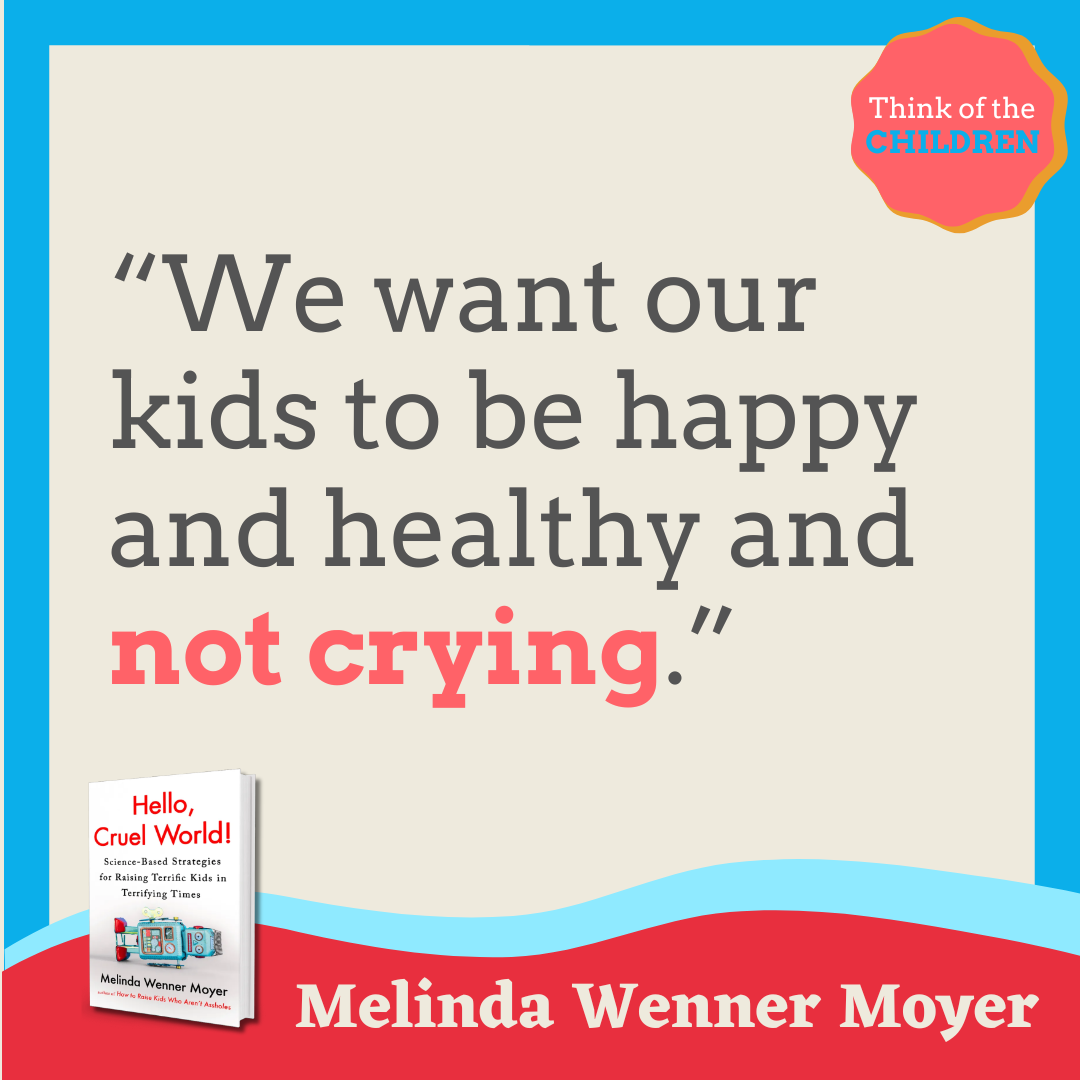
One big shift is in how I respond to my kids’ feelings, like big, negative emotions. When my kids were frustrated, angry, sad, my instinct was to try to convince them that they were fine. To gloss over it or to sort of minimize their feelings. Not intentionally, but I wanted to be like, It’s OK, it’s not a big deal, you don’t need to be so upset about it. Because I hated their big feelings. I was scared of them and I wanted them to be happy. That’s what we want for our kids. We want them to be happy and healthy and not crying. So my instinct was to try to fix their feelings. And what I do now is very different.
My son is turning 14, my daughter is 10, there’s lots of feelings in our home. My daughter woke up just feeling really sad the other day. Instead of saying, Let’s do something so you’re not sad anymore, I really just mirrored back to her, That sounds really hard that you’re feeling sad this morning. I have days like that too where I just feel sad or grumpy and I don’t always know why. I wonder if it would help if you had a good cry. Sometimes it’s good to let it come up.
Instead of trying to fix it, I wanted her to feel that her feelings were welcome and that feeling sad is normal, it’s part of the human condition. I was there if she wanted to talk through possible things she could do, but also that it wasn’t essential to me that she fix it.
It also helps to pull your child out of the moment a little bit and see that bigger picture, which is also really important. One of the components for self-compassion is being able to recognize that you’re having the feeling, which requires some separation from it.
Say more about self compassion, because this is really important in your book.
A lot of us are very good at being compassionate with others, and being able to say, Oh, that seems really hard for that person, but it can be really hard to direct that inwards. We can really put ourselves down when we make mistakes.
We know that self compassion is really important and helpful for all sorts of things: for resilience, for well being, for mental health, all sorts of things. Research really says people who are self compassionate are better able to take on challenges, and are better equipped to be motivated to keep working hard, because when they do encounter struggles, they can handle them so much better.
People who are self compassionate are better able to take on challenges, and are better equipped to be motivated to keep working hard
So as a parent, that might mean helping your kids understand the feelings that they’re experiencing and naming them. The acknowledgement that you’re having a hard time helps pull a child out of the details of the situation. It takes you one step way to say, OK, I’m having a hard time, this is hard. That can pull you away from any kind of rumination.
The other thing that can be useful, and you have to do this carefully, is helping them realize that they’re not alone in feeling this way. You don’t want to necessarily say, Well, everybody feels this way, but you might say, Anybody in this situation might feel this is hard.
Kids, especially teens, might feel like you don’t understand what they’re going through. You can help them see that, yes, it’s really intense, but other people have gotten through this.
Tell me about something that’s challenging for you right now as a parent, in the season of life that your family is in:
My son is about to turn 14, and he is very age-appropriately sharing less with me. He’s pulling away in the way that I know is very normal for teens. But I’m also so worried about maintaining a connection with him too — finding that right balance.
He’s an introvert, so he really does want to recharge at times and spend time alone in his room. I want to give him what he needs while also figuring out, how do I keep the lines of communication open enough?
Tell me something wonderful about your kids.
Everybody warns you about the teen and tween years, but I am not getting that! We get along, we have long conversations at dinner, we laugh a lot. Of course there’s tense moments, but we still have a lot of fun together. I enjoy their company so much, and I think they still enjoy mine, and that is something I celebrate so much.
You can find out more about Melinda at melindawennermoyer.com, or subscribe to her wonderful Substack right here!
 | A guest post by
|
I love this insight (and Melinda’s book is on my nightstand, coming up soon in my reading lineup!) And there is something so liberating and wonderful about allowing people to have their own feelings and not feeling compelled to fix them.
And that is such a good lesson for our kids as well. I remember once when my son was about 10 years old, he said “I think I let my feelings be determined by the feelings of the people around me.” I was blown away – and I realized that that was indeed how our family functioned. Things have changed a lot since then, thankfully. I definitely agree that we are all better off when we can be close to the people we love without feeling the need to take on or fix their emotional burdens, or expect them to manage ours.
I feel like I’m reading a lot about not being able to fix feelings and it’s certainly come up for me a lot in therapy so it seems to be something I need to reinforce to myself repeatedly. My kids are 8 and 6 and having a predictably hard time transitioning back to school and there’s been a lot of “I can’t fix this for them, they are upset and processing and a lot of people might feel this is hard.” Staying present in discomfort is SO hard, I hate to see them hurting but disappointment and frustration are unavoidable. And I think crying helps to move through the emotion too. We don’t always know exactly why we feel off.